As a careful investor, your biggest fear probably isn't the stock price jumping up and down in the short term. It is watching your hard-earned cash vanish overnight because the company suddenly goes belly up.
When the market crashes, weak companies collapse like a house of cards. So how do you spot these "landmine companies" with shaky financials? You open up the company's "financial first aid kit." Inside, you will find the Current Ratio and the Quick Ratio. With just these two metrics, you can figure out a company's ability to survive a crisis in under five minutes.
What are the current ratio and quick ratio? Think of them as the company's financial first aid kit
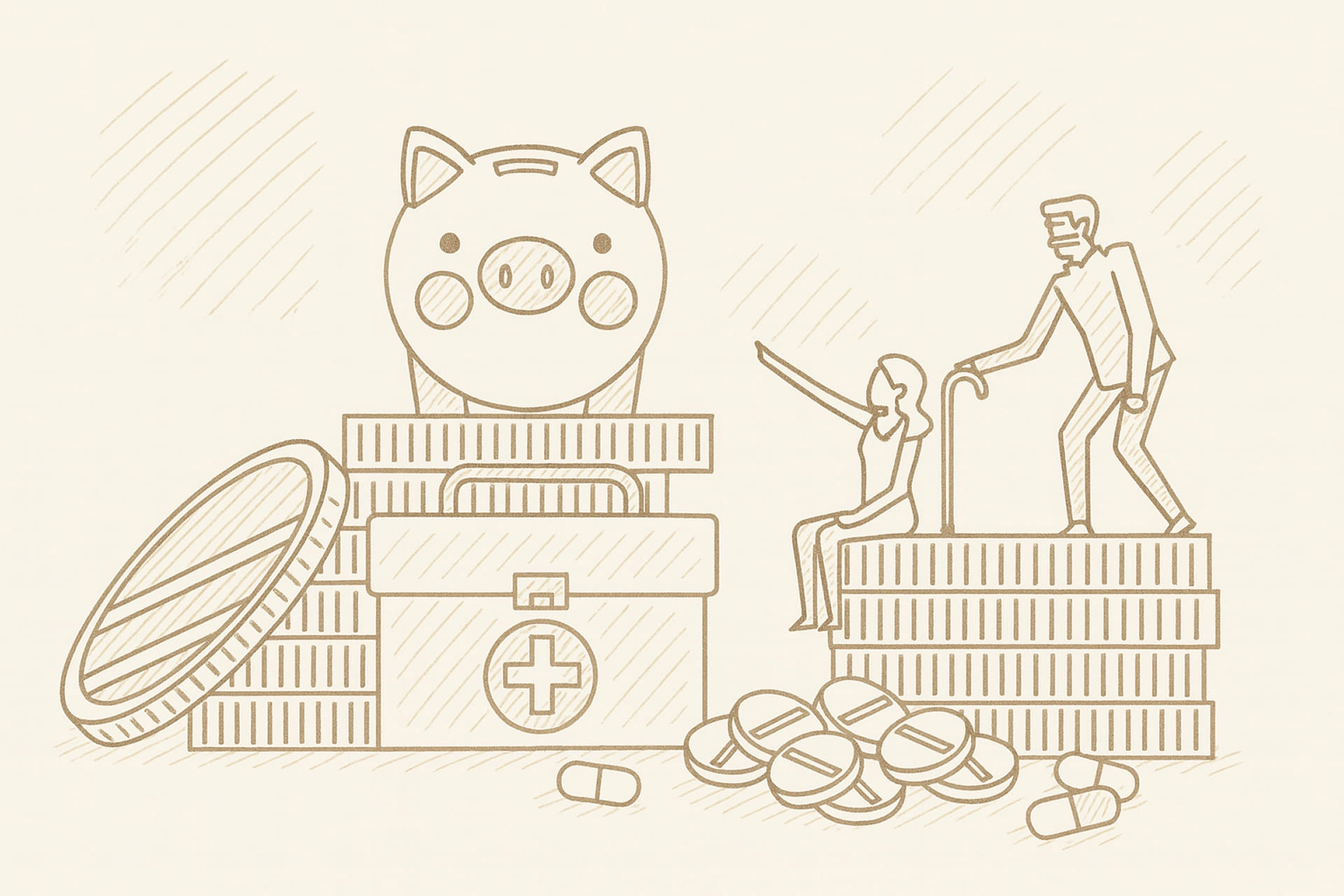
We mentioned the "financial first aid kit" idea earlier for checking a company's health. Now, let's crack that kit open and see what is inside.
The kit has two layers. The bottom layer is the Current Ratio, which is like your "complete kit" stocked for everything. The top layer is the Quick Ratio, which is like your "emergency trauma pack" that you grab for sudden disasters.
Current ratio: The complete first aid kit
Current Ratio = Current Assets / Current Liabilities
Imagine the Current Ratio is like that fully stocked first aid kit you have at home. In practical terms, it represents the company's ability to use "assets that can be turned into cash within a year" to pay off "debts due within a year." Simply put, it answers the investor's question: "Are all the short-term resources enough to pay off the debt?"
Current assets include cash and cash equivalents, bank deposits, marketable securities, short-term investments, accounts receivable, notes receivable, inventory, and prepaid expenses. Current liabilities refer to short-term debts the company must pay back within a year, like short-term loans or accounts payable.
Quick ratio: The emergency trauma pack
Quick Ratio = (Current Assets - Inventory - Prepaid Expenses) / Current Liabilities
Let's say a critical emergency happens and you need to stop the bleeding right now. You wouldn't leisurely dig through the whole first aid kit. You would immediately grab the "emergency trauma pack" right next to you. The Quick Ratio is a stricter, more conservative survival metric. It represents a tough test of a company's ability to handle emergencies.
Why do we specifically take out "Inventory"? Because out of all the current assets, inventory is the hardest to turn into cash and has the highest uncertainty. This is especially true for products that go out of season or expire. For example, old phone inventory might be worthless in a year, and food inventory runs the risk of spoiling.
As for "Prepaid Expenses," this represents money the company paid upfront but hasn't received the goods or services for yet (like prepaid rent or insurance). Since that money is already gone, it basically has zero ability to pay off debt in the short term.
That is why the quick ratio often gives a more realistic picture of how many resources a company can cough up immediately to pay debts when push comes to shove.
What is a reasonable current ratio?
Generally, there is a "standard answer" that the market accepts.
- Current ratio > 200%
- Quick ratio > 100%
The logic behind this is pretty intuitive. A current ratio over 200% means the company's short-term assets are more than double its short-term liabilities. This provides a comfortable safety buffer.
A quick ratio over 100% means that even without relying on inventory at all, the company can pay off all its short-term debts immediately. That is definitely a reassuring signal. For everyone, this works as a filter to quickly weed out the companies that are clearly in bad shape.
The ability to pay off debt
Analyzing a company's safety isn't just about looking at the "debt" side of things. The ability to actually pay that debt off is just as important. Think back to that "first aid kit" metaphor we have been using throughout the article.
Every company is going to have different current and quick ratios, especially across different industries. If you spot something that looks weird, dig in to find out what is causing the difference and check if their peers are in the same boat.