
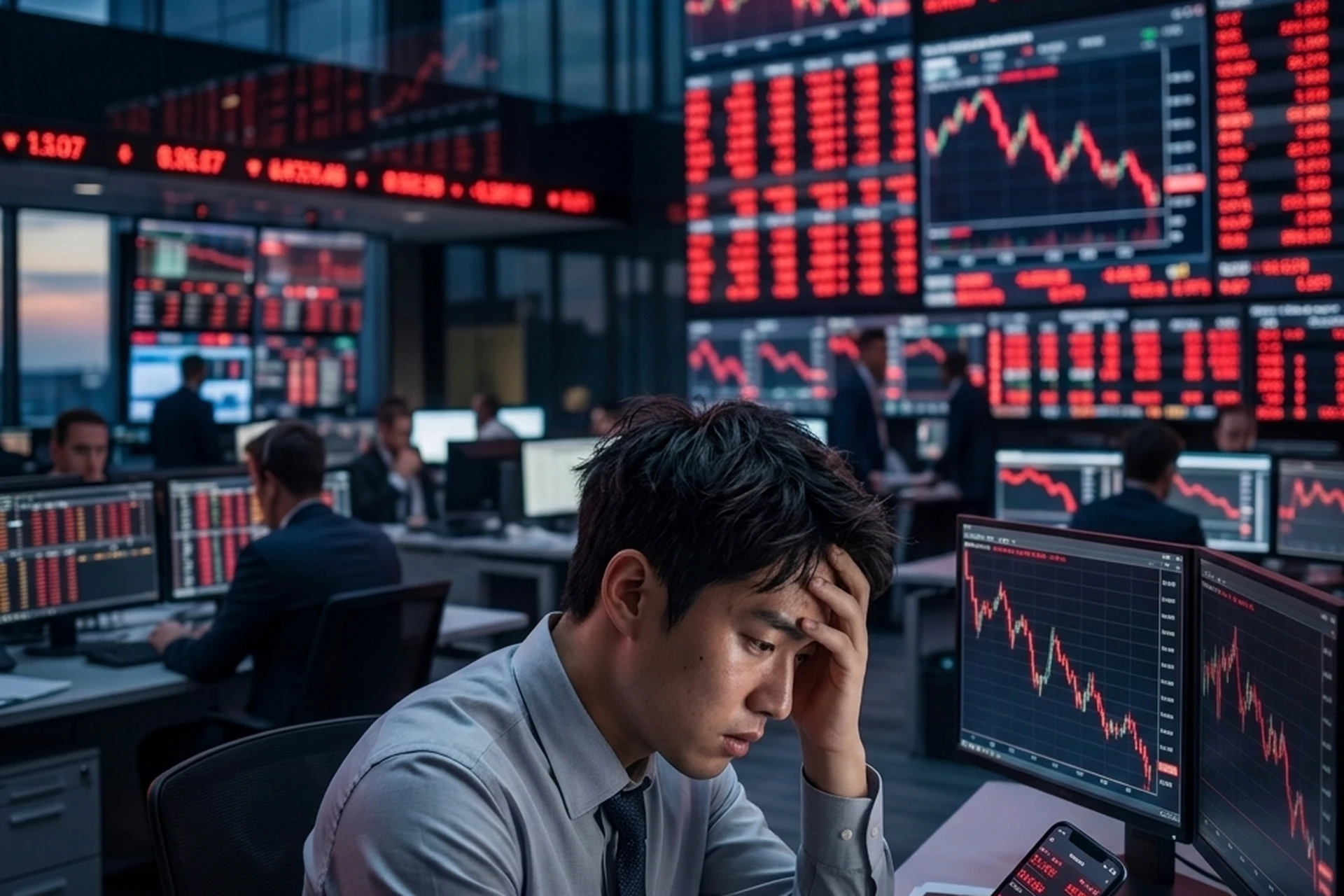
In the first half of 2026, South Korea's stock market (KOSPI) was undoubtedly one of the most eye-catching focal points in global financial markets. The benchmark index surged spectacularly throughout the first half of the year, posting impressive gains. However, entering July, the market suffered a historic and violent pullback, with volatility eclipsing even notoriously skittish cryptocurrencies. This market shock—interwoven with extreme leveraged products, high industrial concentration, and retail speculative sentiment—reverberated across East Asian financial systems.
- Core Event: South Korea's KOSPI index plunged over 30% after hitting an all-time high of 9,385 in 2026, triggering multiple full-market circuit breakers and 38 Sidecars in a single month. The crash was primarily driven by valuation pullbacks in memory giants Samsung Electronics and SK Hynix, alongside cascading liquidations of retail high-leverage products.
- Scope of Impact: Soaring margin balances and single-stock leveraged ETF volumes sparked negative feedback selling pressure, forcing the Financial Supervisory Service (FSS) to freeze new single-stock leveraged ETF approvals. Global semiconductor supply chains including Micron (MU), NVIDIA (NVDA), and the semiconductor ETF (SOXX) were swept up in the market panic.
- Key Conclusion: Financial leverage accelerates downside risks rather than creating long-term value. For value investors, short-term liquidity stampedes driven by forced liquidations represent an opportunity to evaluate quality businesses returning to their intrinsic value and Margin of Safety.
Multiple Circuit Breakers in a Single Month: What Happened to South Korea's Stock Market?
South Korea's stock market delivered one of the wilder roller-coaster rides among global equity benchmarks in 2026. Within a short period, capital markets transitioned from extreme euphoria to spreading panic, while frequent trading halts highlighted the fragile structure of market liquidity.
From Extreme Prosperity to a Bear Market Threshold
At the start of 2026, the KOSPI index was hovering around 4,244 points before embarking on an epic rally fueled by the AI memory chip boom. By June 19, the index hit an all-time peak of 9,385 points, posting cumulative gains exceeding 120%. However, the prosperity was short-lived as the market was quickly hit by relentless profit-taking and margin debt liquidation.
By mid-July, the KOSPI tumbled over 23% in just one month and dropped more than 30% from its peak to below 6,516 points, wiping out most of the year's extraordinary gains and entering a technical bear market. Accompanying the crash was an astonishing frequency of trading halts. In the first seven months of 2026, full-market Circuit Breakers were triggered 7 times (March 4, March 9, June 8, June 23, June 26, July 7, and July 13). Meanwhile, the Sidecar mechanism tracking KOSPI futures was activated 38 times—averaging a trigger every 3.5 trading days—reflecting severe liquidity disruptions.
Structural Fragility Behind "Surface Prosperity"
A closer look at the market rally reveals an unhealthy underlying market structure. Although the KOSPI hit record highs in late June, over 650 out of the 831 constituent stocks actually fell on that peak day. This indicated that the benchmark's gains were almost entirely propped up by a handful of mega-cap tech stocks.
Samsung Electronics and SK Hynix together account for over 50% of the KOSPI's index weighting. Including their listed subsidiaries, the semiconductor concentration is even higher. Index funds tracking the KOSPI effectively turned into a single-sided bet on global AI memory cycles. When capital became overly concentrated in just two tech giants, any reversal in their stock prices left the broader market without structural support, leading to a catastrophic drop.
Inside the Eye of the Storm: High-Leverage Tools and Retail "Ants" Gambling for Wealth
Beyond industrial concentration, the deeper driver of extreme volatility lay in South Korea's retail trading culture and the negative feedback loops triggered by hasty financial derivative products.
High-Leverage Trading Culture Fueled by Social Anxiety
South Korea has a massive retail investor base, known locally as "Ants." These traders are known for acting in unison, pursuing high-risk plays, and chasing momentum. For many young Korean retail investors, taking on high leverage is driven by deeper social realities.
In Seoul, housing prices remain exorbitant, requiring an average worker to save 14 years of salary to purchase an apartment. Traditional savings feel inadequate to close the gap created by asset inflation. Under these conditions, trading apps offering one-click 5x margin loans became seen as an equalizer for wealth accumulation. By late June 2026, domestic margin loan balances hit a record 38.63 trillion won, while total investor debt exceeded 60 trillion won. When market rallies rely heavily on debt, severe downside liquidity risks are guaranteed.
The Fatal Flaws and Death Spiral of Single-Stock Leveraged ETFs
The key catalyst pushing the market over the edge was a regulatory misstep. After restricting retail access to foreign leveraged ETFs in 2025, regulators hastily approved over a dozen 2x single-stock leveraged ETFs tracking Samsung Electronics and SK Hynix in May 2026. These products were eagerly snapped up, with retail investors holding over 90% of outstanding shares.
To maintain fixed daily leverage ratios, leveraged ETFs mechanically engage in daily rebalancing—selling into falling markets. At their peak, these single-stock leveraged ETFs and their underlying semiconductor stocks accounted for over 70% of daily trading volume in South Korea's $4 trillion stock market. This mechanical selling pressure combined with retail Margin Calls to spark forced liquidations. In July alone, over 1.2 million leverage accounts hit margin call thresholds, and over 300,000 accounts suffered complete forced liquidations totaling 344.2 billion won.
The Regulator's Regret: FSS Governor's Public Admission of Policy Error
Faced with a disaster amplified by financial engineering, regulators intervened on July 16, 2026, suspending all new single-stock leveraged ETF listings to cool speculative fever.
Financial Supervisory Service (FSS) Governor Lee Chan-jin issued a candid self-criticism during a press conference. Lee admitted that approving single-stock leveraged ETFs was rushed and had failed to attract foreign capital while unleashing unmanageable side effects. He expressed deep regret, stating: "I am full of regret over whether I should have lain down to block the launch." Lee highlighted that average daily turnover rates for these products reached 122.5% to 200%, meaning entire outstanding shares changed hands once or twice a day in rampant intraday scalping. He criticized: "At a gambling table, isn't the person who takes the cut the one who makes the most money? This extreme turnover only enriches brokerages collecting trading fees, bringing no real benefit to retail investors."
Chip Giant Pullbacks and Foreign Capital Rotation
The market shock was triggered not only by retail margin liquidation but also by global capital re-evaluating the AI semiconductor cycle and capital expenditure return timelines.
Profit-Taking in Samsung Electronics and SK Hynix
As primary suppliers of High Bandwidth Memory (HBM) and advanced DRAM, Samsung Electronics and SK Hynix saw exploding profits in early 2026. However, after quarters of massive AI data center construction by US hyperscalers, markets began questioning when these capital investments would translate into end-user software revenues.
As sentiment shifted from euphoria to scrutiny, high-valuation chip stocks faced profit-taking. On July 13, SK Hynix plunged 15.37%—its largest single-day drop in history—while Samsung Electronics fell 10.70%. Both stocks dropped over 30% from their June peaks. Although the Bank of Korea issued a report reassuring that the AI chip cycle remains in supply deficit, deleveraging selloffs drowned out fundamental support in the short term.
Institutional Realignment vs. Retail Absorption
While retail investors went all-in via leveraged ETFs and margin debt, foreign institutional investors did the opposite. Many global funds face strict portfolio concentration limits; as Samsung and SK Hynix surged, managers were required to trim positions.
In the first seven months of 2026, foreign investors net sold $108 billion in KOSPI equities, withdrawing over $40 billion from SK Hynix alone. Foreign funds offloaded shares at peak valuations to enthusiastic retail buyers. When foreign outflows, retail margin calls, and leveraged ETF rebalancing coincided, stock prices plummeted far beyond fundamental changes.
US Market Contagion and Corporate Winners vs. Losers
Because semiconductor supply chains are globally interconnected, South Korea's deleveraging spillover naturally impacted US tech giants and institutional asset allocation.
Beneficiary & Resilient Companies
Despite market turbulence, companies occupying critical bottlenecks or possessing flexible asset allocation demonstrated solid risk resilience.
NVIDIA (NVDA) & AMD (AMD): As leading AI compute chip providers, NVIDIA and AMD are key buyers of HBM memory from SK Hynix and Samsung. While short-term prices fluctuated with the semiconductor ETF (SOXX), underlying customer demand and data center CapEx remained intact. Deleveraging in Korean memory stocks cleared out speculative trading without disrupting physical chip deliveries. Analyses from Morgan Stanley and JP Morgan emphasized that hyperscaler CapEx guidance remains strong, and healthy memory price adjustments help manage overall AI server hardware costs.
Citigroup (C): As a major financial institution, Citigroup displayed proactive risk management. Prior to the Korean liquidation wave, Citi downgraded South Korea's equity rating from Overweight to Neutral, tactically reallocating capital to Taiwan and China where valuations and policy support were more favorable. This timely risk mitigation highlights institutional advantages in navigating high-leverage markets.
Impacted Companies Facing Pressure
Conversely, select memory peers and equipment manufacturers faced valuation pressure due to market contagion and CapEx uncertainty.
Micron Technology (MU): As the third major memory giant alongside Samsung and SK Hynix, Micron saw its market cap fall over $350 billion from peak levels due to peer valuation drag. Although Micron's operational balance sheet is sound, memory stocks collectively underwent re-pricing during the Korean forced liquidation wave.
Applied Materials (AMAT) & Lam Research (LRCX): Core semiconductor equipment makers Applied Materials and Lam Research suffered market cap corrections exceeding $100 billion. Following massive stock pullbacks in South Korea, investors worried Korean memory makers might delay or trim future CapEx expansion plans, introducing short-term order uncertainty for equipment providers.
Takeaways from Mr.Cafe
South Korea's extreme stock market circuit breaker events offer global investors a vital lesson in risk management. When retail investors turn trading into a high-leverage gamble, the stock market morphs into a fragile casino that fails to generate genuine long-term wealth. Value investors must strictly distinguish between Mr. Market's irrational mood swings and a company's Intrinsic Value.
The cascading liquidations in South Korea were fundamentally a deleveraging stampede. For value investors, the most critical takeaway is: never use leverage to participate in extreme market sentiment. When forced liquidations cause indiscriminate selling, quality companies often return to prices offering a genuine Margin of Safety.